Digital Out-of-Home
Digital advertising in the places people go.
Digital screens in streets, transport hubs, and commercial spaces connect advertisers with people away from home. A successful network starts with the right locations and a reason for advertisers to keep buying.
How Digital Out-of-Home Works
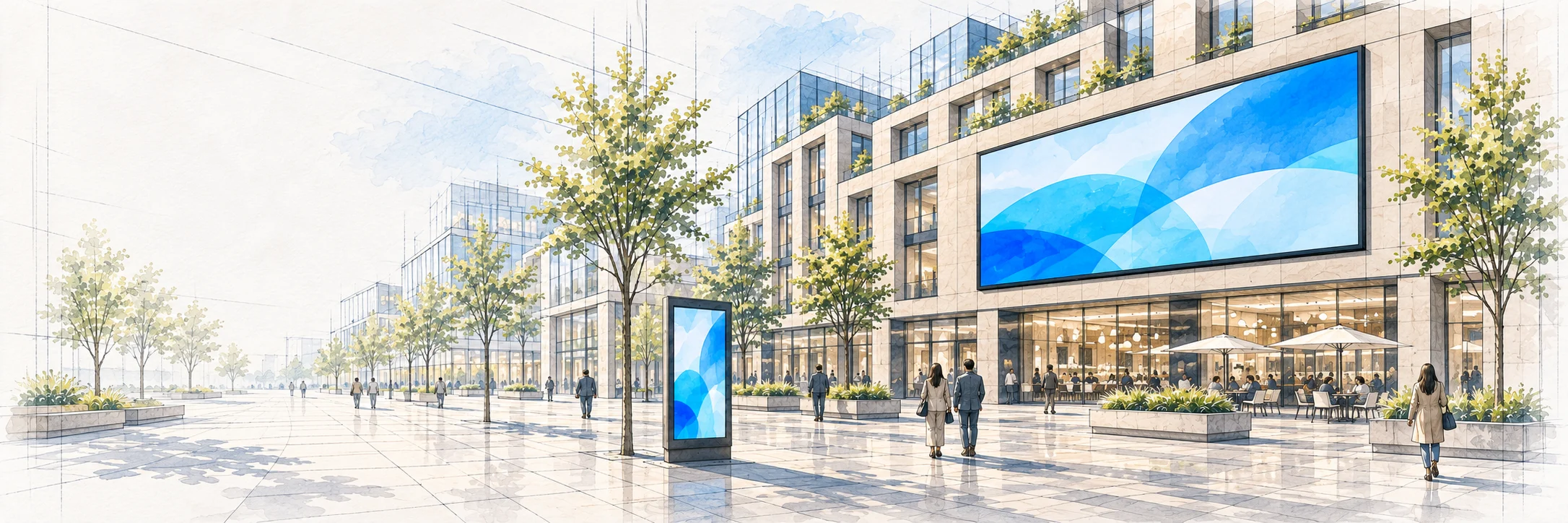
Digital out-of-home, or DOOH, is advertising on screens in public and commercial places. A network operator secures locations, installs and maintains displays, and sells advertising time across those screens.
Campaigns can be sold directly or through automated buying platforms. The operator needs to match the audience and setting to the advertiser, deliver the booked campaign, and report what ran.
Where the Location Shapes the Message
A roadside display has seconds to communicate. A screen in a station or venue may have longer. The format, viewing distance, and time people spend nearby affect what works.
Roadside Displays
Large screens reach people along roads and commuter routes. Clear, brief creative suits an audience that is moving past.
Street Furniture
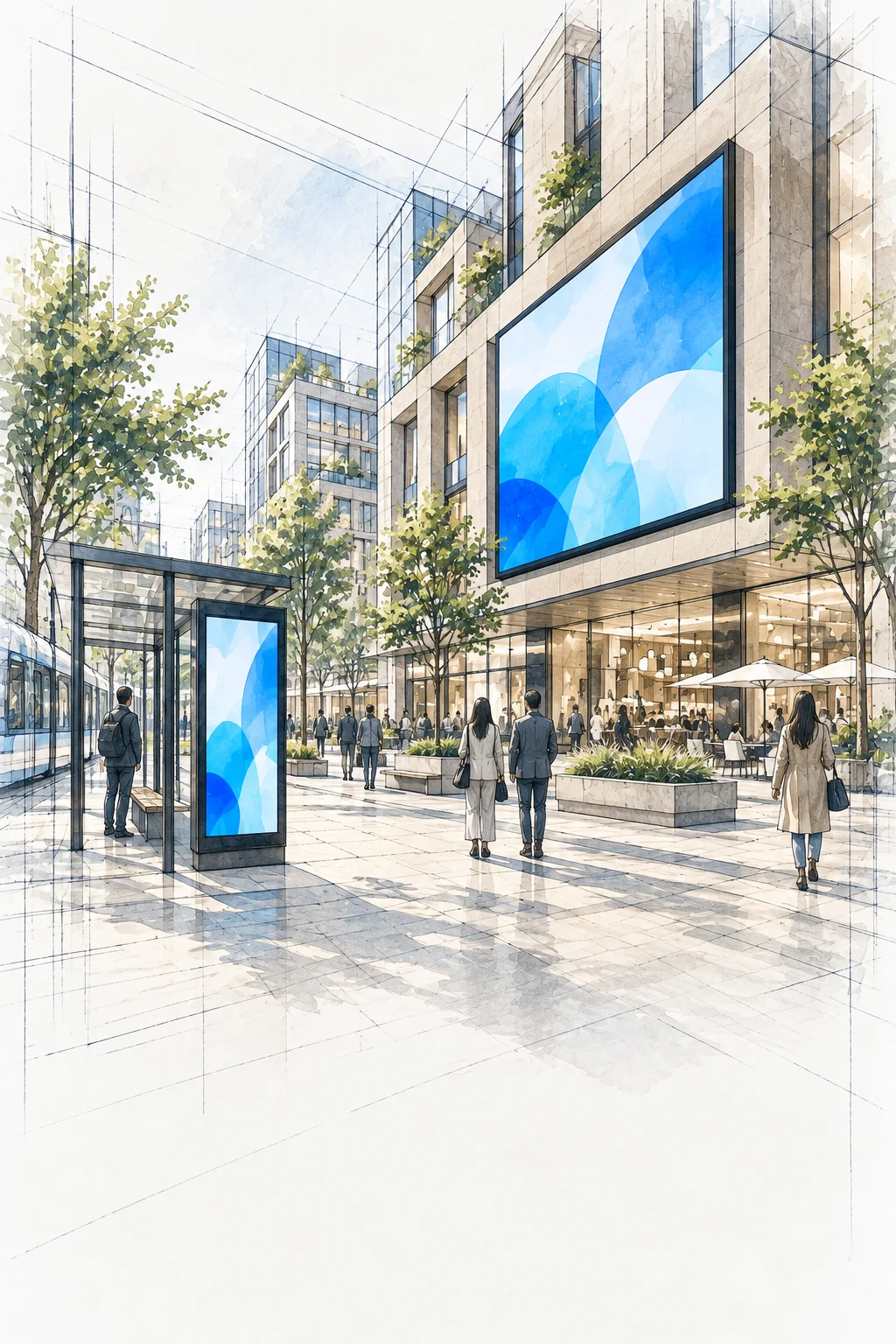
Digital panels at bus shelters and on pedestrian streets put messages at street level, close to everyday journeys.
Transport Hubs
Screens in stations and airports reach travelers as they arrive, wait, and change connections. Placement matters as much as the size of the screen.
Venue Networks
Displays in malls, gyms, and other shared spaces reach people in a specific setting. The content should fit why people are there.
Operating a DOOH Network
Each location brings obligations as well as advertising inventory. Site agreements, equipment, sales, and reporting all need to work together.
Site Rights and Installation
Secure the right to operate at each location. Account for the agreement term, required permissions, power, connectivity, and safe access for maintenance.
Advertising Sales
Define what advertisers can buy, when it runs, and what it costs. Compare direct and programmatic sales after platform fees and the location owner’s share.
Campaign Delivery
Schedule approved creative, monitor screen and player health, and respond when a display goes offline. Keep playback records and clear responsibilities for repairs.
Measurement Buyers Can Trust
A playback record confirms an ad ran; it does not count the people who saw it. Explain how audience estimates are produced and what the campaign results can support.
How We Assess a DOOH Business
We advise, own, and scale technology companies.
Our assessment starts with the rights to each location, repeat advertiser demand, and the economics of operating the network.
Site Rights and Audience
How durable are the site agreements? Who can see the displays, under what conditions, and why would an advertiser pay to reach that audience?
Revenue per Location
How much inventory sells, at what net price? After site payments, sales costs, and operating expenses, what does each location contribute?
Cost of Expansion
What does it take to secure, install, and support the next group of locations? Can the business fund that growth without relying on unrealistic sales assumptions?
Discuss Your DOOH Business
Tell us about your locations, your network, and where you need help, whether you are planning a rollout or improving an existing business.